The Art of Theatre Floor Restoration: Preserving Performance Spaces in London
Why Theatre Floors Demand Specialist Care
In my years working with performance venues across London, I have seen more badly maintained theatre floors than I care to count. The irony is that these surfaces take more punishment than almost any other wooden floor in a commercial building. Between scene changes, heavy set pieces, and the constant foot traffic of rehearsal and performance, a theatre floor lives a hard life. Yet many venues treat their floors as mere decking, something to be patched up when the splinters get too bad. That approach costs more in the long run, both in money and in safety.
Theatre floor restoration is not the same as domestic sanding. The demands are different, the materials are different, and the tolerances are tighter. A stage floor has to be flat enough for a dancer to land safely, durable enough for a touring musical, and often beautiful enough to be seen by the audience. That is a tall order for any wood flooring specialist, and it is why I always recommend working with someone who understands the specific needs of performance spaces.
A Unique Set of Stresses
Think about what happens on a stage floor in a single week. At the National Theatre, for example, a production might require a full set change every evening. That means heavy flats, rolling platforms, and often steel fixtures scraping across the boards. At Shakespeare's Globe, the floor is exposed to the elements, with rain and sun accelerating wear. At the Old Vic, the stage sees everything from ballet to rock concerts. Each of these uses puts different stresses on the wood, and each requires a different approach to maintenance and restoration.
One of the most common mistakes I see is venues trying to treat their stage floor like a domestic hardwood floor. They buy off-the-shelf products meant for living rooms and wonder why the finish peels after a single performance. The reality is that theatre floors need industrial-grade finishes that can handle repeated abrasion, impact, and sometimes chemical cleaning. Products like Bona Sport and Pallmann Magic Oil are formulated for exactly this kind of high-traffic environment. They provide a tough, flexible finish that moves with the wood and resists scuffing. Osmo Polyx Oil and Norge Natural Oil are also excellent choices for venues that want a natural look without sacrificing durability.

The Restoration Process in Practice
When I am called in to assess a theatre floor, the first thing I look at is the subfloor. Many older venues, like those near Trafalgar Square or around Westminster Abbey, have historic buildings with uneven joists and decades of settlement. If the subfloor is not stable, no amount of sanding or coating will give a lasting result. That is why a proper restoration always starts with a thorough inspection, sometimes involving structural work before the floor itself is touched.
The next stage is sanding. This is where experience really matters. A theatre floor needs to be sanded flat, not just smooth. That means using a large industrial sander with a dust extraction system, and often multiple passes with progressively finer grits. I have seen floors ruined by operators who took off too much material on one side, leaving a dip that made the stage unsafe for performers. For a venue like the Royal Opera House, where dancers land with force on one foot, even a small imperfection can cause injury. So we take our time, checking flatness with a straightedge after each pass.
Once the floor is flat and smooth, we choose the finish. This is where the real art of theatre floor restoration comes in. The finish has to balance slip resistance, durability, and appearance. A ballet floor needs a different coefficient of friction than a drama stage where actors wear shoes. We often use a combination of products, for instance a base coat of Pallmann Magic Oil for penetration and a top coat of Bona Sport for abrasion resistance. Some venues prefer a harder, more glossy finish; others want a matte, natural look. The choice depends on the type of performances the venue hosts, and we always discuss it with the technical director before proceeding.
Historic Venues Require Extra Sensitivity
London has more historic theatres than almost any other city, and many of them are listed buildings. Working in a venue like the Old Vic or the National Theatre, which may have original floorboards from the nineteenth century, requires extreme care. Historic England has guidelines about what can and cannot be done to original fabric, and we have to respect those. Sometimes we cannot sand as aggressively as we would like, because the boards are already thin from centuries of wear. In those cases, we might use a gentler method like screen and recoat, applying a thin layer of finish to extend the life of the floor without removing more wood.
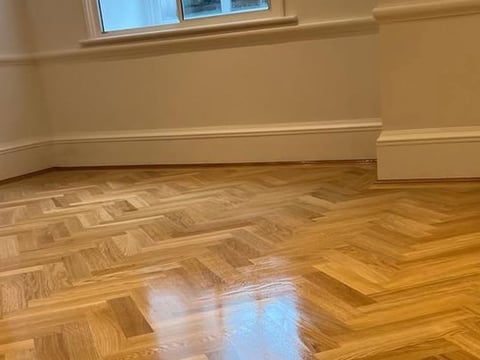
One of my favourite projects was at a small theatre near Sylvia's Real Wood Flooring showroom in Clerkenwell. The floor was a beautiful parquet pattern, probably original to the building, but it had been neglected for decades. The finish was gone, the gaps between the blocks were filled with dirt, and some blocks were loose. We had to carefully lift the loose blocks, clean the gaps, and re-lay them with adhesive before we could even start sanding. The result was stunning, and the venue now has a floor that will last another fifty years with proper maintenance.
Maintenance Between Restorations
No restoration lasts forever, but good maintenance can triple the life of a finish. For theatre floors, I recommend a regular cleaning routine that uses only the products specified by the finish manufacturer. Many venues make the mistake of using generic cleaners that strip the oil or wax, leading to premature wear. A simple dust mop and a damp mop with the right cleaner is usually enough. For high-traffic areas, like the wings where stagehands walk, we often recommend a sacrificial coating that can be reapplied every few months.
Some venues have started using protective mats in the wings and crossover areas. This is a good idea, but the mats themselves can trap moisture against the floor, causing staining or mould. I always advise venues to lift and dry the mats regularly. It is a small effort that pays off in reduced restoration costs.
London Floor Restoration has been doing this work since 2006, and we have seen floors from every angle. We work closely with suppliers like The Wood Flooring Company and Solid Start to ensure we have access to the best materials for each job. For theatre floor restoration, we also rely on Parker Knoll for dust control equipment, because keeping the venue clean during work is essential when the theatre is still operating around us.
Getting the Timing Right
The biggest challenge in theatre floor restoration is scheduling. A commercial theatre cannot close for weeks while the floor is being redone. So we have to plan the work in the summer break, or during a dark period when no show is running. That means we often work long days, sometimes seven days a week, to get the job done in a tight window. It is physically demanding work, but when you see the floor finished and know that the next production will be safer and look better, it is worth it.
If you are responsible for a theatre floor, I encourage you to think of it as an investment in your venue's future. A properly restored floor not only looks professional but also reduces the risk of accidents and extends the life of the wood. The cost of theatre floor restoration is often less than the cost of replacing damaged boards or compensating for injuries. It is one of those rare cases where doing the right thing also makes financial sense.
Ends · THETHEATREFLOORRESTORATIONPOST